Mental health system still falling short for young people and Māori, new report shows
Te Hiringa Mahara – Mental Health and Wellbeing Commission - says improvements in Aotearoa New Zealand’s mental health and addiction system must come faster to meet the rising need for young people and Māori.
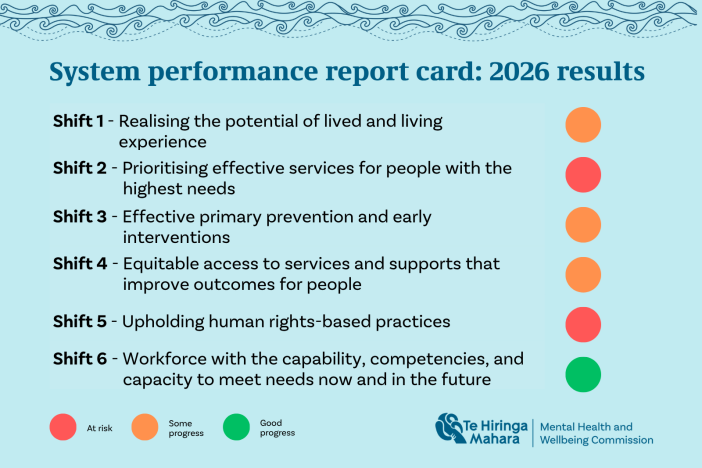
Today Te Hiringa Mahara has released its latest ‘report card’ on the state of Aotearoa New Zealand’s mental health system. The System performance monitoring report assesses whether people can get help early, access support equitably, receive safe and effective care in crisis, and move through a system that responds to their needs and the needs of their whānau.
“This report shows the system is improving in some areas, but for the people who need it most, we are losing ground,” says Te Hiringa Mahara Chief Executive Karen Orsborn.
“There are signs of progress across the system, however of the six focus areas we measure, only workforce is improving and ‘on track’. In practice, that means although access to services is improving overall, it is not improving fast enough for young people, who continue to face rising psychological distress and persistent gaps in age-appropriate support.
“We are also seeing increased unmet need for professional mental health support for Māori with investment in culturally appropriate services not keeping up.
“We continue to see high rates of seclusion and other coercive practices being used, which raises concerns about the ability of the system to uphold human rights-based practice. Māori continue to experience these practices at a higher rate than any other group. We also want to see action toward not having young people admitted into adult units.
“A fair, robust mental health system is one that works for everyone. For us to achieve that, we must see strong leadership, targeted action where need is greatest, and a more coordinated response to the wider drivers of mental distress,” says Ms Orsborn.